stations
Network Rail forecasts £1.49bn a year in station retail sales across 19 stations by 2036
A Network Rail report published on 10 November 2026 predicts annual visits to its 19 managed stations will pass 870 million by 2036, with customer spending rising 45% over the decade.
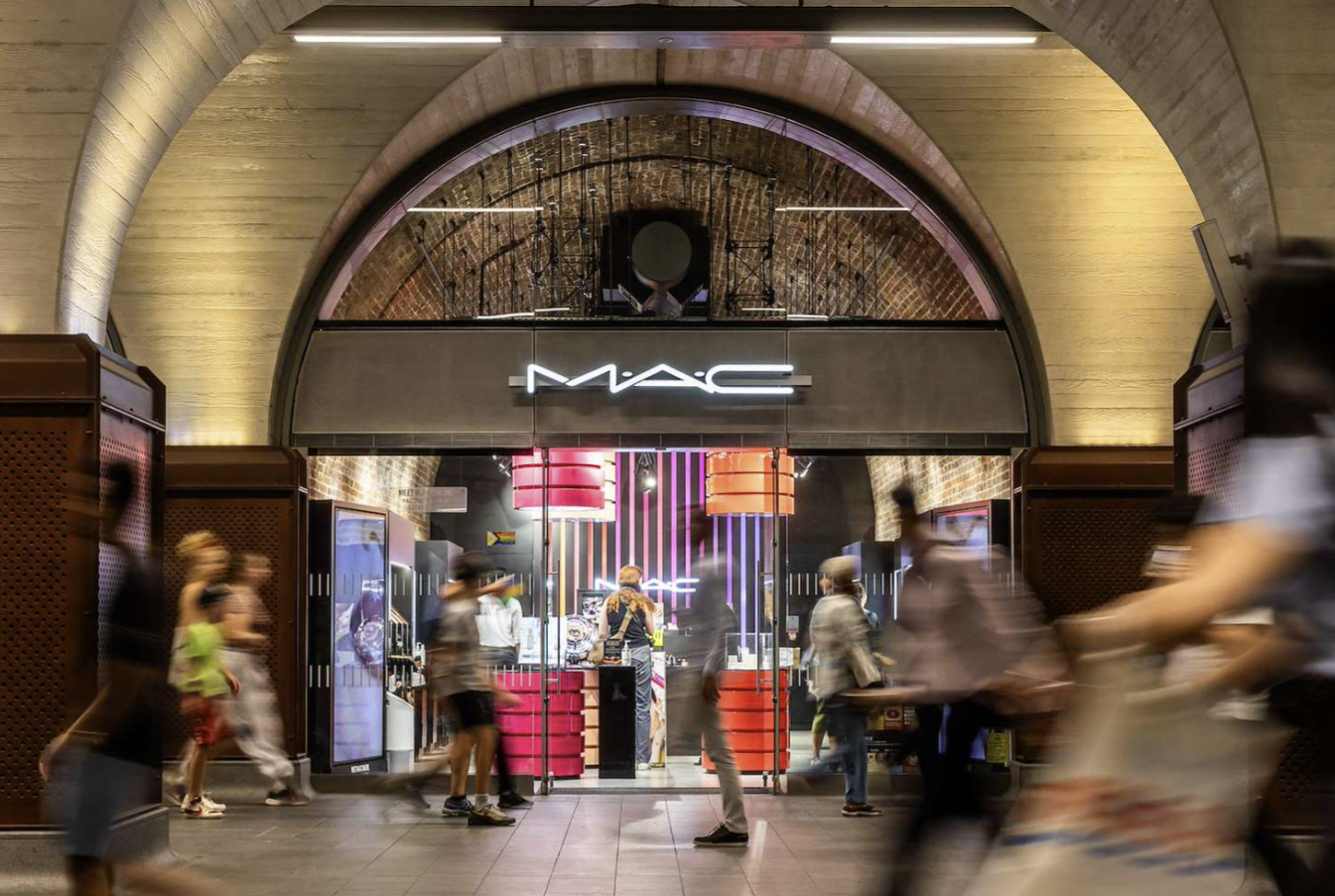
Network Rail has forecast that annual customer spending across its 19 managed stations in Britain will reach £1.49bn by 2036, a 45% rise over the next decade, in a report published on 10 November 2026.
The report, titled The Future of Stations 2036: Retail, F&B, Leisure and the Wellness Dividend, predicts that annual visits across the 19 stations, which include London Waterloo, London King's Cross, Birmingham New Street, Manchester Piccadilly and Glasgow Central, will exceed 870 million by 2036.
Network Rail said the growth would be driven by rising customer numbers, more leisure travel, changing food and beverage offers and the growing influence of wellness on what people buy. The report draws on the views of Network Rail's retail category leaders, retailers, industry experts and forecasters.
Harriet Hepburn, Corporate Finance, Partnerships and Retail Director at Network Rail, said: "Success will depend on understanding a range of customer needs, creating offers that complement dwell time, removing friction for customers and delivering engaging experiences that cannot be replicated online."
The wellness forecast
Food and beverage will remain the anchor of station retail, according to the report, but Network Rail identified wellness as one of the biggest growth opportunities over the next 10 years.
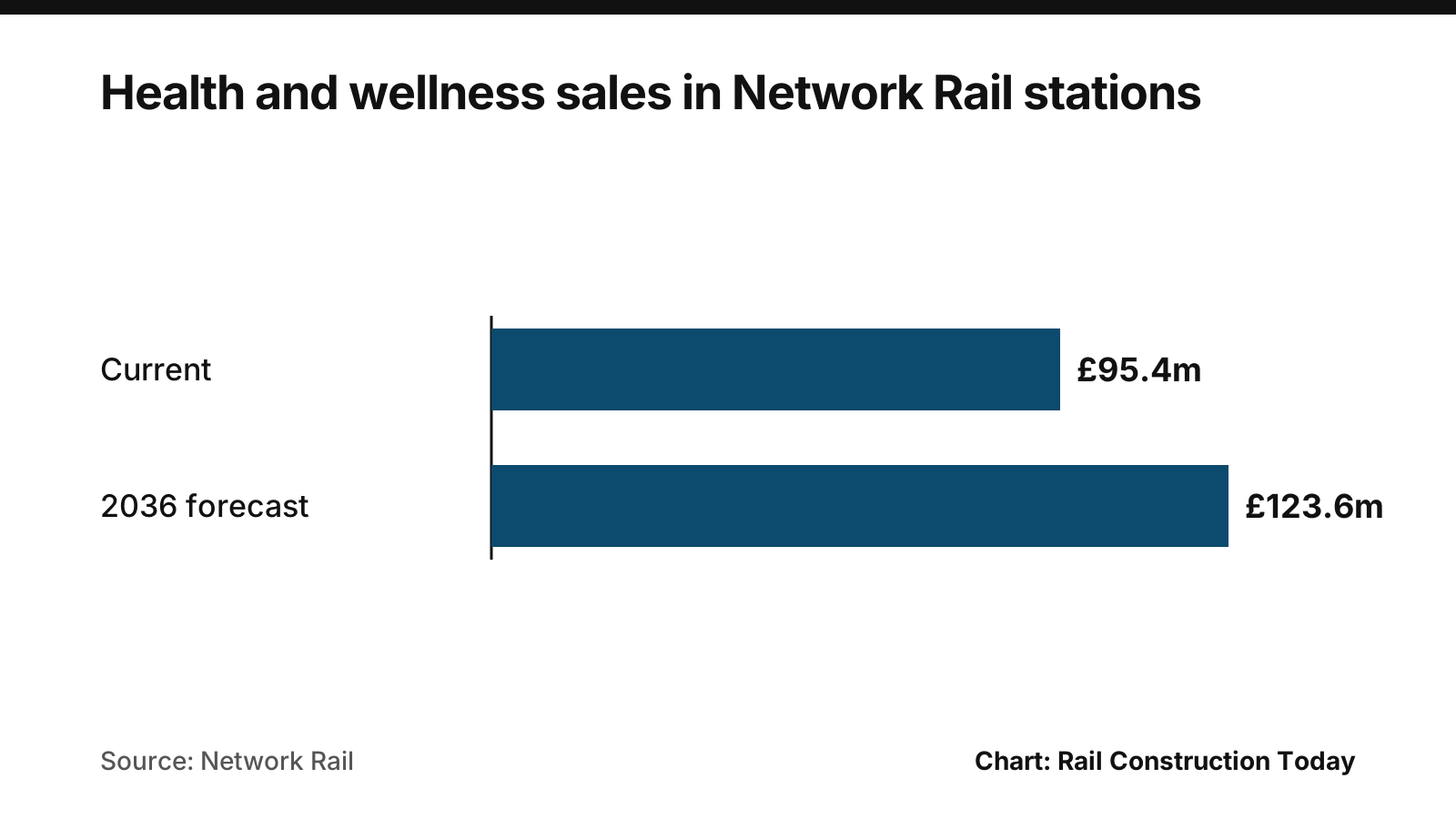
Health and wellness-related sales currently generate £95.4m, or 8.9% of total station sales, and are forecast to rise to £123.6m by 2036, growth of 30%.
| Health and wellness sales | £m |
|---|---|
| Current | 95.4 |
| 2036 forecast | 123.6 |
Network Rail said almost half of health and beauty shoppers in stations, 46%, are aged between 18 and 34. Leisure travellers, with an average household income of £53,738, account for 55% of health and beauty users in stations.
Network Rail also cited a figure, attributed in a footnote to a 2026 UCL study, that 10% of the population are using GLP-1 medication to manage weight loss, which it said was reshaping how the UK thinks about health and eating out.
Fiona Thomson, Category Manager at Network Rail, said that by 2036 customisation would be the default, but that aligning it with speed and convenience would be key.
Jacqueline Windsor, Head of Retail at PwC, said: "Wellness has become a protected spend. Many consumers may make savings elsewhere, but they continue to invest in products, services and experiences that help them live longer and healthier lives."
Leisure travel
A Network Rail survey of 5,133 people carried out in November 2025 found leisure day trips to be the biggest growth rail category, with leisure passengers making up 46% of overall station spend.
Hepburn said the next 10 years would be a defining decade for station retail, food and beverage, health and wellness and leisure experiences.
The current base
The forecasts build on a station estate that has been growing in recent years, according to Network Rail's own published figures.
Network Rail's August 2024 release said annual station retail sales for 2023/24 passed £842m, 2% ahead of 2019/20. Network Rail Property, which describes itself as the commercial property function of the railway, said it has 600,000 sq ft of retail space and over £65m in monthly sales across its managed stations.
Network Rail Property's review of 2025 said footfall across its 19 station retail locations rose from 700 million to 747 million. It recorded nearly 193 million visits across its managed stations in summer 2026, up 8.9% on summer 2024, with London King's Cross seeing a 58.5% rise in customer visits over that period. Autumn footfall rose from 182.8 million visits in 2024 to 189.6 million in 2025, with 17 of the 19 locations growing year on year.
Network Rail's station count varies between its publications. The report and Network Rail Property refer to 19 managed stations, while Network Rail's own stations page says it owns and manages 20 stations, including Birmingham New Street, Manchester Piccadilly, Edinburgh Waverley, Glasgow Central, Leeds, Bristol Temple Meads and 11 in London.
Great British Railways
Network Rail said the report came as Great British Railways takes shape, and that the future GBR estate is expected to cover around 2,500 stations across Britain.
The Department for Transport's Railways Bill factsheet says Great British Railways will take charge of infrastructure including track, stations and depots.
On the record: Department for Transport
Sources
- Network Rail (opens in a new tab) (accessed 2026-11-10)
- Network Rail Property (opens in a new tab) (accessed 2026-11-10)
- Network Rail Property (opens in a new tab) (accessed 2026-11-10)
- Network Rail (opens in a new tab) (accessed 2026-11-10)
- Network Rail (opens in a new tab) (accessed 2026-11-10)
- Network Rail Property (opens in a new tab) (accessed 2026-11-10)
- Department for Transport (GOV.UK) (opens in a new tab) (accessed 2026-11-10)
This story was researched from the primary sources above and checked against them before publication. Spotted an error? Tell us and we will correct it promptly.