stations
Liverpool Street first British station to top 100 million entries and exits, ORR says
Office of Rail and Road station usage estimates for April 2025 to March 2026 put London Liverpool Street at 102.7 million entries and exits, with Leeds overtaking Manchester Piccadilly outside the capital.
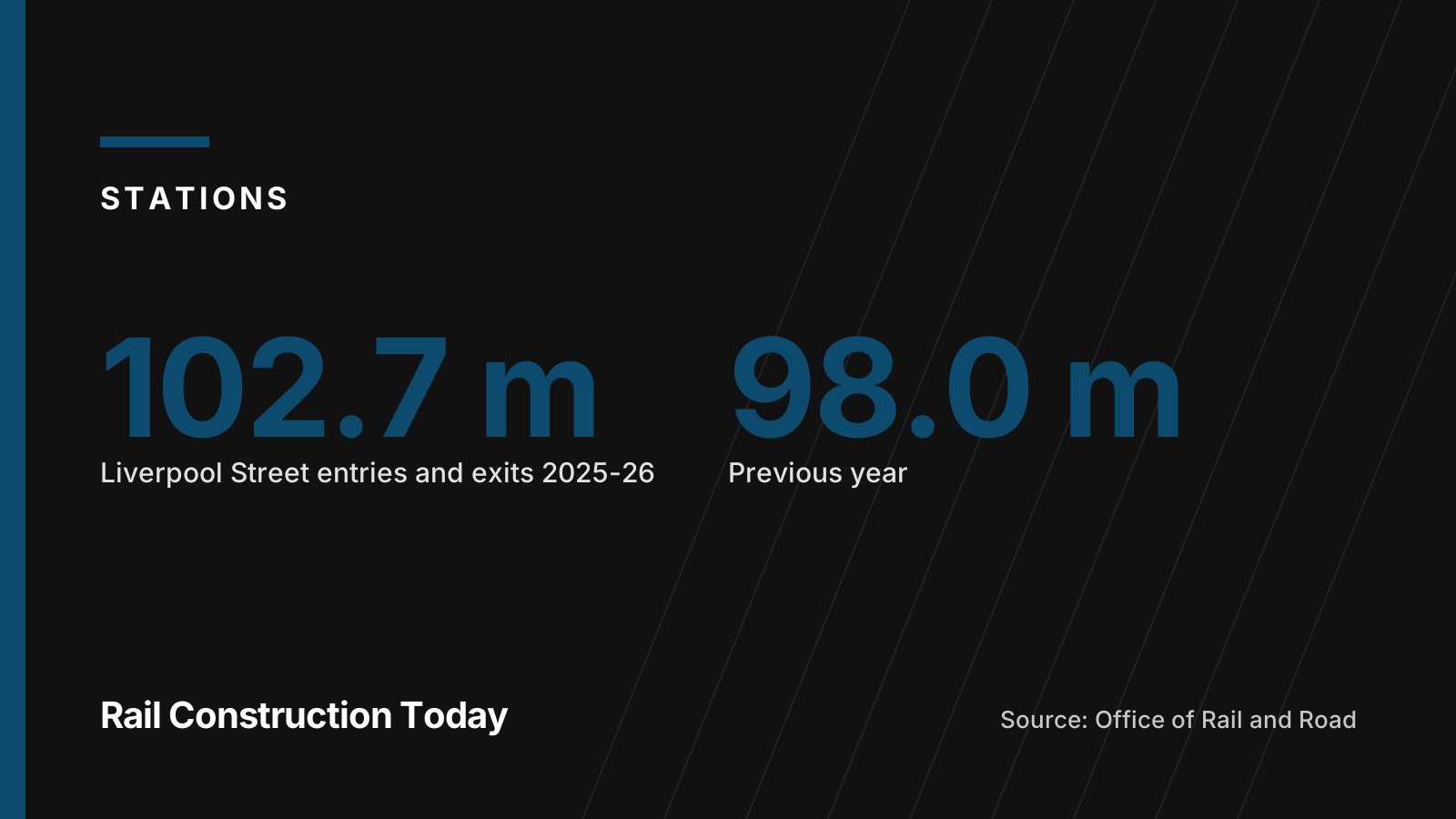
London Liverpool Street recorded an estimated 102.7 million entries and exits between April 2025 and March 2026, the Office of Rail and Road (ORR) said on 19 November, making it the first station in Great Britain to pass 100 million in a single year since its time series began.
The figure was up from 98.0 million the previous year, and the station held its place as Britain's most used for the fourth consecutive year, according to the regulator's Estimates of station usage release.
Graham Richards, ORR's director of planning and performance, said: "Liverpool Street becoming the first station to exceed 100 million entries and exits in a single year is a significant milestone for Britain's railway."
He said the figures followed ORR's passenger rail usage statistics, which showed a 6% rise in journeys across Great Britain over the same year, and that the latest estimates also showed increases at stations outside London including Birmingham New Street, Glasgow Queen Street and Cardiff Central.
The national top 10
ORR's table shows movement behind Liverpool Street. London Paddington rose from third to second with 72.9 million entries and exits, swapping places with London Waterloo on 71.6 million. Farringdon climbed two places to sixth, while London Victoria slipped from sixth to eighth.
| Rank | Station | Entries and exits | Rank last year |
|---|---|---|---|
| 1 | London Liverpool Street | 102.7m | 1 |
| 2 | London Paddington | 72.9m | 3 |
| 3 | London Waterloo | 71.6m | 2 |
| 4 | Tottenham Court Road | 67.2m | 4 |
| 5 | London Bridge | 57.0m | 5 |
| 6 | Farringdon | 55.3m | 8 |
| 7 | Stratford (London) | 54.5m | 7 |
| 8 | London Victoria | 53.9m | 6 |
| 9 | Bond Street | 46.2m | 9 |
| 10 | London Euston | 42.2m | 10 |
Outside London
Birmingham New Street remained the most used station outside the capital with 38.8 million entries and exits. Leeds overtook Manchester Piccadilly for second place, recording 28.0 million against 26.6 million.
Glasgow Central stayed Scotland's busiest with 25.1 million, followed by Edinburgh Waverley on 23.9 million. Cardiff Central remained the most used station in Wales with 12.9 million.
Both of Liverpool's main stations moved up the rankings. Liverpool Central rose from ninth to seventh with 16.2 million and Liverpool Lime Street from 10th to eighth with 15.8 million, while Brighton fell from seventh to ninth and Glasgow Queen Street from eighth to 10th.
At the other end of the table, Reddish South in Greater Manchester was Britain's least used station with 94 entries and exits over the whole year. Denton in Greater Manchester recorded 100, Elton and Orston in Nottinghamshire 102, Chapelton in Devon 148 and Shippea Hill in Cambridgeshire 154.
Busiest journeys
The statistics also rank flows between pairs of stations. The busiest was between London Liverpool Street and Tottenham Court Road, with 8.2 million journeys, and ORR said six of the 10 busiest journeys were between stations served only by the Elizabeth line.
Outside London, the Birmingham New Street to Coventry flow was the busiest with 2.5 million journeys, followed by Edinburgh Waverley to Glasgow Queen Street with 2.3 million.
Richards said: "Our rail usage statistics provide a valuable picture of passenger travel across the country, helping the rail industry understand changing demand and make informed decisions about services and future investment."
How the figures are compiled
ORR said the estimates are derived primarily from LENNON, the rail industry's ticketing and revenue system, together with some local ticketing data, with adjustments made to estimate entries, exits and interchanges. They are estimates of entries and exits rather than counts of individual passengers.
The regulator cautioned that methodology improvements, including the inclusion of ticket sales previously unavailable and better allocation of journeys to specific stations, mean the estimates are not always directly comparable over time. According to the ORR data portal, the estimates are produced by Steer on behalf of ORR, and the origin-destination matrix behind them is freely available on the Rail Data Marketplace.
ORR describes itself as the primary producer of official statistics for rail in Great Britain.
The station
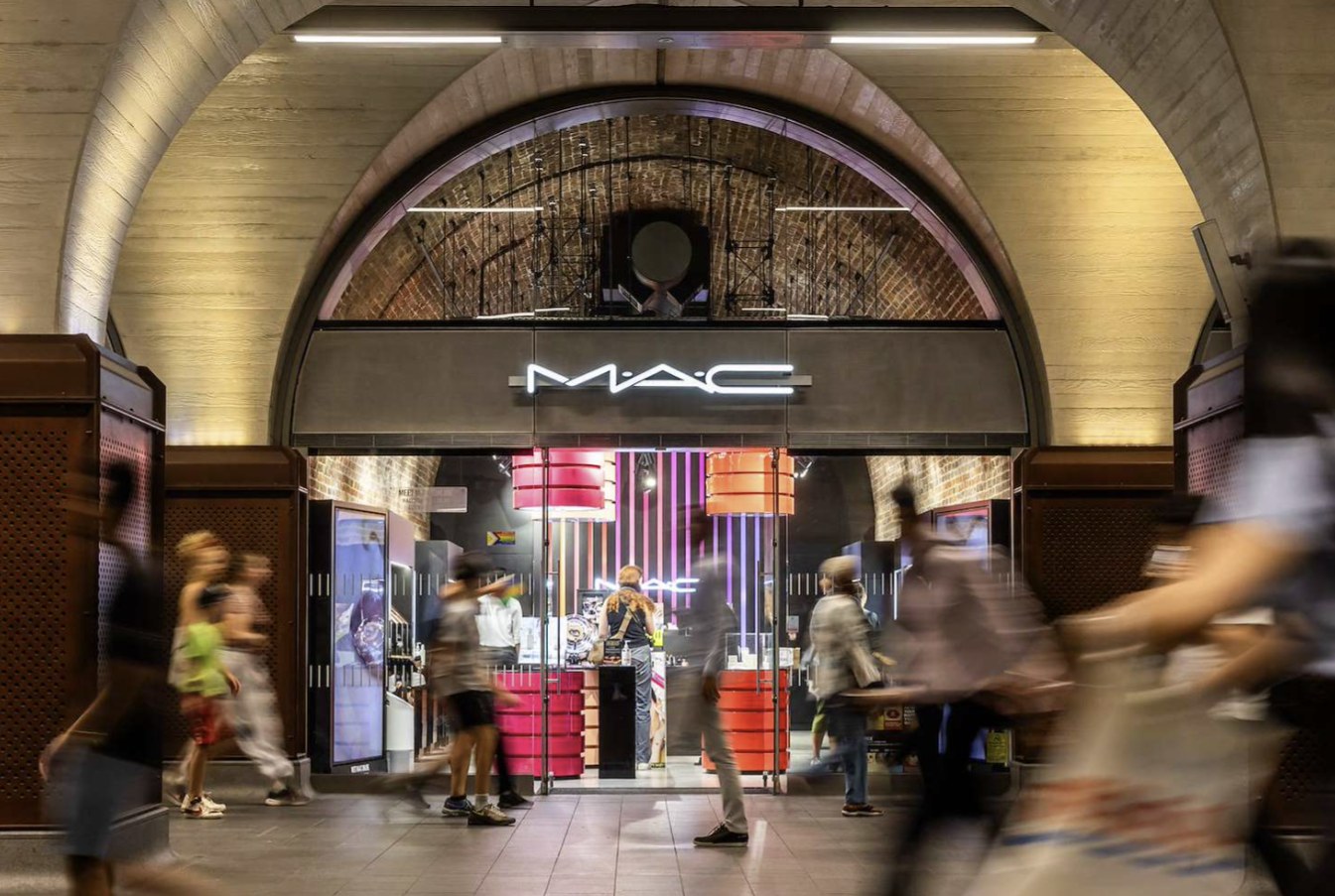
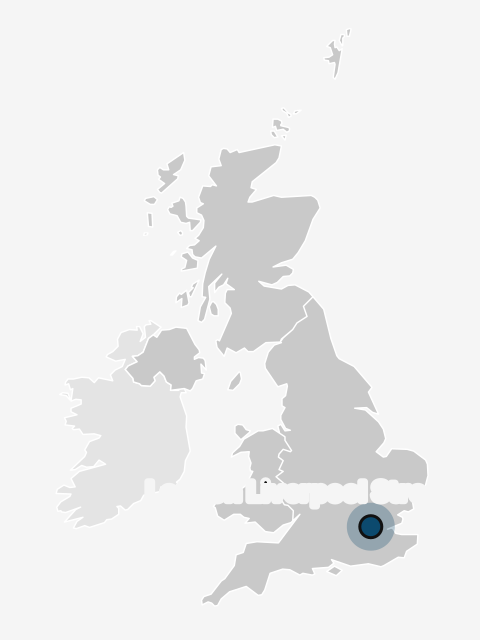
Network Rail, which manages London Liverpool Street, says the station opened in 1874 as a replacement for Bishopsgate station and was designed to integrate with the London Underground network. It lists 17 platforms and describes the station as the starting point for journeys to Cambridgeshire, Essex, Greater London, Hertfordshire, Norfolk and Suffolk.
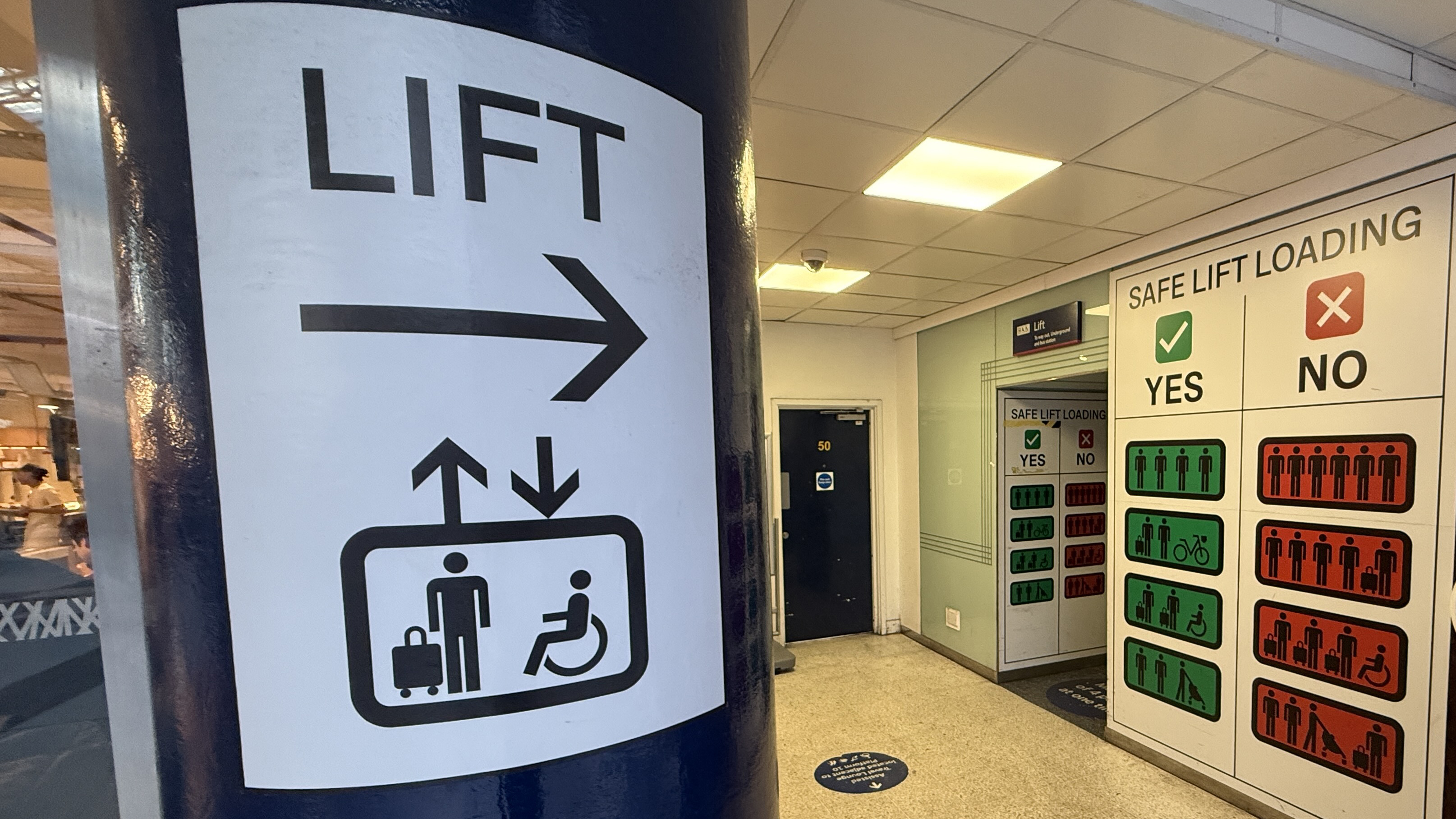
Network Rail says a refurbishment of the passenger lift at Liverpool Street will start on Sunday 22 November 2026 and run until mid-February 2027.
On the record: Office of Rail and Road
Sources
- Office of Rail and Road (opens in a new tab) (accessed 2026-11-19)
- Office of Rail and Road (ORR Data Portal) (opens in a new tab) (accessed 2026-11-19)
- Network Rail (opens in a new tab) (accessed 2026-11-19)
This story was researched from the primary sources above and checked against them before publication. Spotted an error? Tell us and we will correct it promptly.