renewals
Grantham bridge in Network Rail's ten most struck as national strikes rise to 1,706
Network Rail says Barrowby Road bridge was hit 12 times in 2025/26, while a £50,000 camera and sensor trial with BES Group at nearby Harlaxton Road detected strikes on most, but not all, occasions.
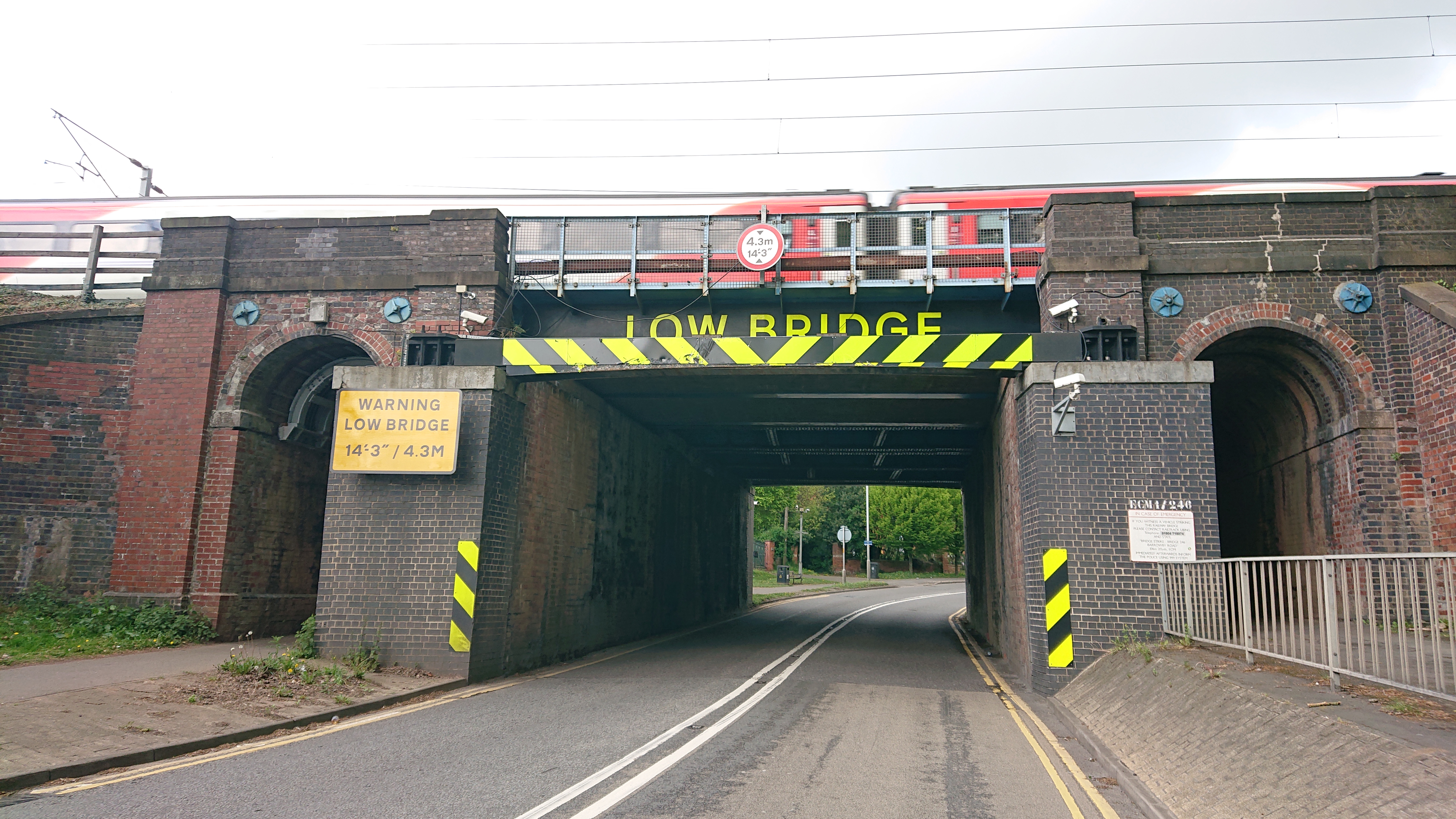
Network Rail has named Barrowby Road bridge in Grantham among Britain's ten most struck railway bridges after it was hit 12 times between April 2025 and March 2026, as national strikes rose to 1,706.
The infrastructure owner published the figures on 18 November to mark Road Safety Week 2026, which runs from 15 to 21 November. Network Rail said the year's strikes caused more than 185,000 minutes of passenger delay and cost about £13.25m in delays, cancellations and repairs, equivalent to about one strike every five hours.
Simon Pumphrey, Network Rail's East Coast route infrastructure director, said: "Every time a vehicle hits a railway bridge, it has the potential to cause significant disruption for passengers while our engineers carry out essential checks to make sure the railway is safe."
He added: "A few simple checks before setting off can help prevent a bridge strike and all the disruption it causes."
The national picture
Network Rail's national release puts the 2025/26 delay total at 185,319 minutes, from 1,706 strikes. The previous year, 2024/25, saw 1,666 strikes, so the total has risen by 40. Network Rail put the 2024/25 delay figure at 186,384 minutes and the cost at about £12m in delays and cancellations.
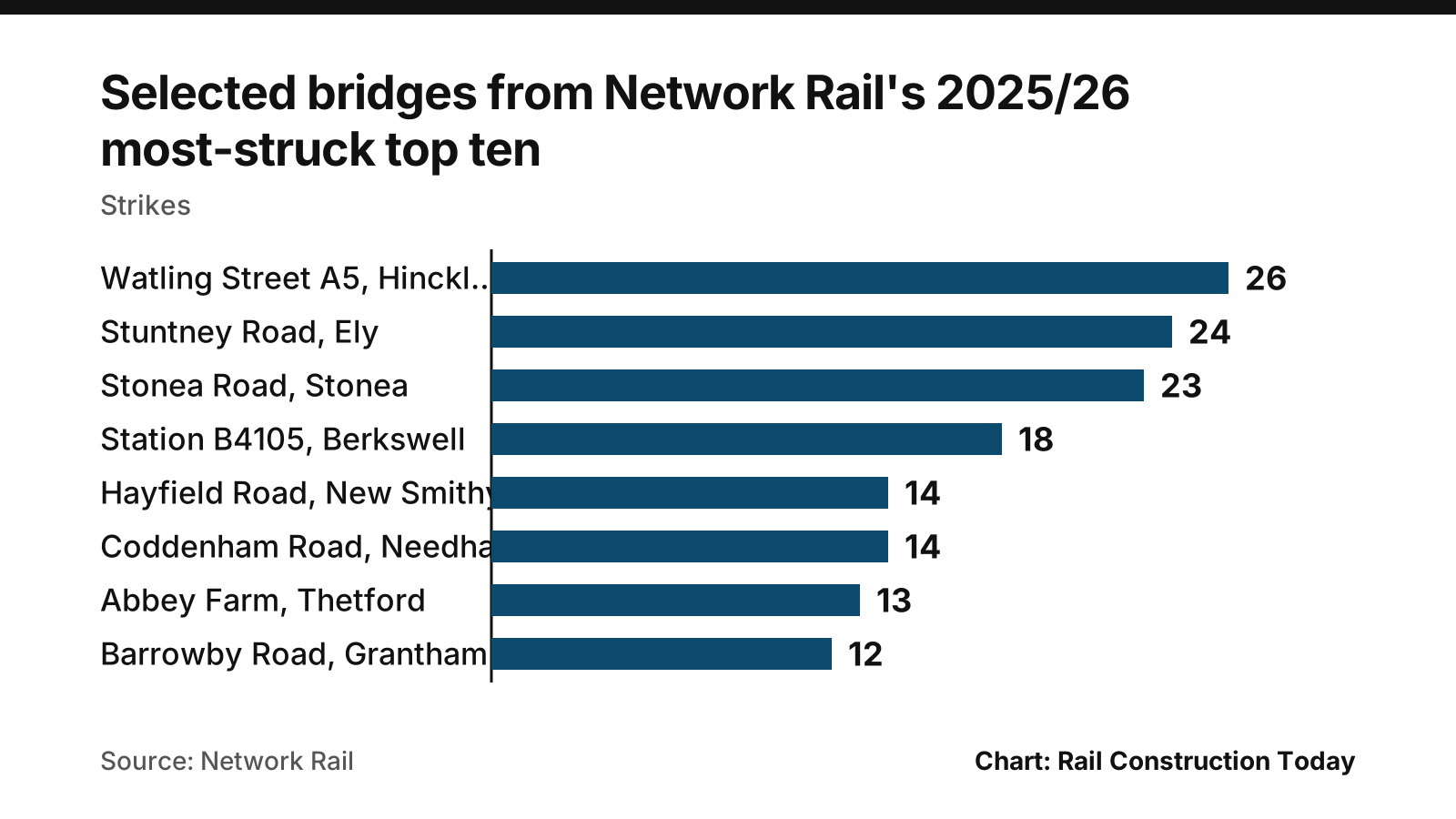
Watling Street A5 in Hinckley, Leicestershire, topped the list for the second year running with 26 strikes, four more than its 22 in 2024/25. Stuntney Road in Ely was second with 24 and Stonea Road, Stonea, third with 23.
Barrowby Road's 12 strikes compare with 11 in 2024/25. Network Rail's national release notes that Prescott Street in Wigan, Middleton Road in Surrey and Poole Road in Poole were also each struck 12 times in 2025/26.
| Bridge | Strikes 2025/26 |
|---|---|
| Watling Street A5, Hinckley | 26 |
| Stuntney Road, Ely | 24 |
| Stonea Road, Stonea | 23 |
| Station B4105, Berkswell | 18 |
| Hayfield Road A624, New Smithy | 14 |
| Coddenham Road, Needham Market | 14 |
| Abbey Farm, Thetford | 13 |
| Warminster Road, Westbury | 13 |
| Mantle Road, Brockley | 13 |
| Barrowby Road, Grantham | 12 |
The Harlaxton Road trial
Grantham has also hosted Network Rail's trial of technology intended to cut the disruption that follows a strike. Network Rail first announced the £50,000 trial using cameras and sensors on the East Coast Main Line at Grantham on 16 January 2025, saying that if it proved successful the same system would be installed at other suitable bridges in the town.
On 8 December 2025 Network Rail said it had partnered with BES Group, which it described as risk-management specialists, for a remote monitoring trial at Harlaxton Road bridge, with cameras and sensors due to be installed before the end of that month and a three-month trial period to check the system met its requirements.
In the trial design, sensors measure the impact and check the structure and rail tracks, while cameras give visual indications after a strike. Network Rail said the system captures data and video footage instantly after a collision and provides real-time alerts.
Richard Woodford, Network Rail asset engineer, said at the time that bridge strikes cost the British rail industry millions of pounds a year in delays, cancellations and repairs.
Harlaxton Road was Britain's second most struck bridge in 2024/25 with 18 strikes, up from 14 in 2023/24, when it ranked fifth. It does not appear in the 2025/26 top ten.
Network Rail said this week that during the trial the technology detected bridge strikes and provided engineers with information that could support quicker assessment of potential damage "on most, but not all, occasions". It said it is using the findings to refine the technology and assess its potential for future use.
Why strikes disrupt the railway
Network Rail says that after every incident the bridge has to be examined to make sure it is safe and any debris cleared. It owns and operates 30,000 bridges, tunnels and viaducts across 20,000 miles of track.
Most vehicles that hit railway bridges are heavy goods vehicles and buses, according to Network Rail's Wise Up, Size Up campaign page, which says its research found 43% of lorry drivers admit to not measuring their vehicle before heading out. Separately, Network Rail's page on the risk of bridge strikes says its research found 32% of drivers set off without knowing their vehicle height and 56% did not consider low bridges when planning a journey.
Network Rail runs a network of bridge strike champions covering each route, who visit logistics companies to raise awareness. It says that following legal cases it can claim back costs from hauliers, although some strikes are hit and run.
Road Safety Week is a national campaign run each November by Brake. Network Rail's ranking is based on strikes reported to it between 1 April 2025 and 31 March 2026.
Sources
- Network Rail (opens in a new tab) (accessed 2026-11-19)
- Network Rail (opens in a new tab) (accessed 2026-11-19)
- Network Rail (opens in a new tab) (accessed 2026-11-19)
- Network Rail (opens in a new tab) (accessed 2026-11-19)
- Network Rail (opens in a new tab) (accessed 2026-11-19)
- Network Rail (opens in a new tab) (accessed 2026-11-19)
- Network Rail (opens in a new tab) (accessed 2026-11-19)
- Brake (opens in a new tab) (accessed 2026-11-19)
This story was researched from the primary sources above and checked against them before publication. Spotted an error? Tell us and we will correct it promptly.