renewals
Network Rail extends Leaf Guard treatment to North Wales Coast after Conwy Valley trial
Network Rail Wales and Borders is applying Interflon Leaf Guard between Conwy and Anglesey this autumn after a Conwy Valley Line trial recorded no slippery-rail incidents or related delays in 2025.
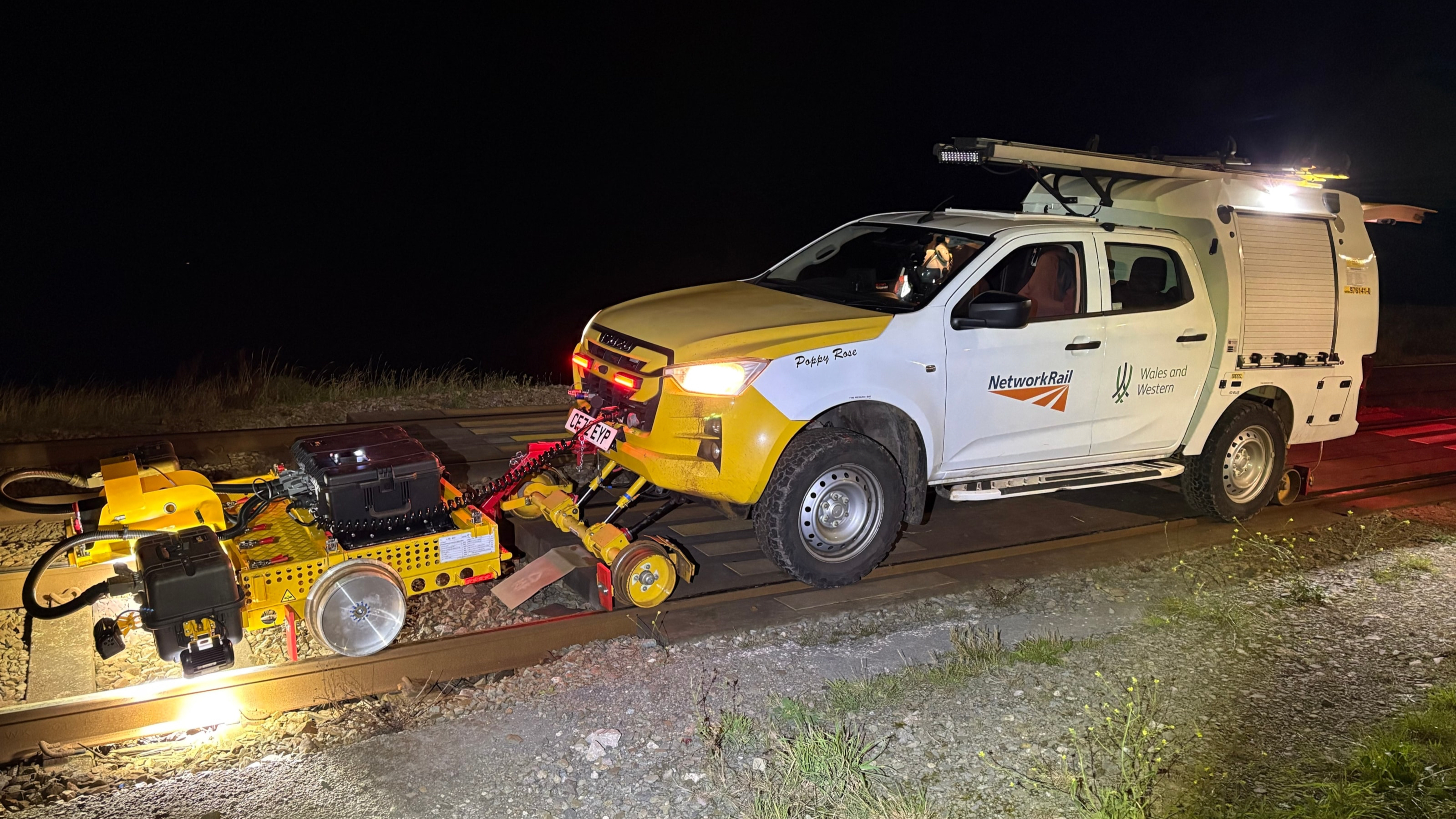
Network Rail is extending its Interflon Leaf Guard rail treatment to the North Wales Coast Line between Conwy and Anglesey after a Conwy Valley Line trial recorded no slippery-rail incidents or related delays in autumn 2025.
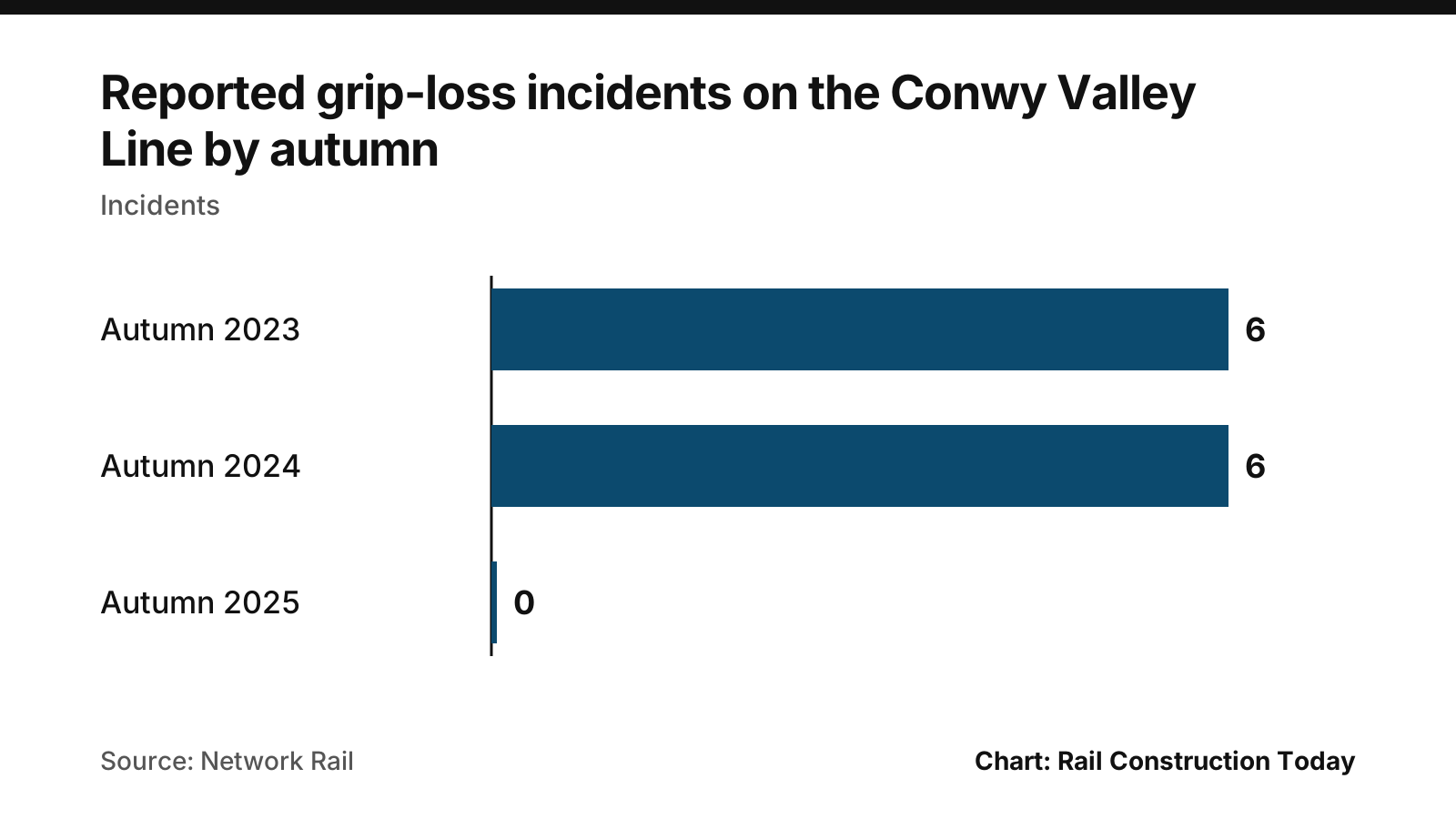
The infrastructure owner said the trial, run between Tal-y-Cafn and Blaenau Ffestiniog, compared with almost 500 minutes of leaf-related delay on the line the previous year. There were six reported incidents of trains losing grip in each of the two autumns before 2025.
The expanded programme covers about 650 cumulative treatment miles over 12 weeks this autumn and winter. Network Rail said the locations were chosen because they had suffered significant leaf-fall adhesion problems in previous years.
Daniel Booth, Head of Operational Weather Strategy at Network Rail Wales and Borders, said: "While there are a number of factors that can affect conditions on the railway, these early results are extremely encouraging."
The trial results
| Autumn | Reported grip-loss incidents, Conwy Valley Line |
|---|---|
| 2023 | 6 |
| 2024 | 6 |
| 2025 | 0 |
Network Rail said the treatment is reapplied every seven days through the autumn. In its October 2025 winter preparations release, the company said Interflon Leaf Guard was being applied to the rails to break down leaf contamination.
Manufacturer Interflon describes the product as a fast-acting biodegradable railhead cleaner that dissolves leaf polymers. It says the operational standard is one application every seven days, with rain or water jetting reactivating the protective effect during the week, and that the product was validated with Network Rail and Irish Rail.
The application system
In 2025 Wales and Borders became the first Network Rail route to apply the treatment by computer control rather than manual spraying. The system, called RRV-SMART, is fitted to a specially adapted 4x4 road-rail vehicle.
As the vehicle travels at about 10mph, the system monitors its speed and automatically adjusts the amount of treatment applied to the rails. Network Rail said the technology was jointly developed by Network Rail Wales and Borders, Fitzgerald Plant Services, Interflon Ireland and JCP Engineering Ireland.
Booth said: "we've worked with our supply chain partners to pioneer a completely new way of applying the treatment, becoming the first route in Network Rail to introduce this computer-controlled technology."
Network Rail is working with Transport for Wales to analyse wheel-slip data recorded by trains, to assess how well the treatment performs alongside other autumn measures.
Camera trial on the same vehicle
The same vehicle is carrying a portable version of One Big Circle's AiVR Focus line-scanning camera system, adapted with the technology company to be deployed wherever it is needed. The camera records the track and surrounding infrastructure as the vehicle moves.
Network Rail said the trial will test whether the system can add monitoring on routes not regularly covered by dedicated inspection trains. One Big Circle says AIVR Focus imagery and location data are transmitted automatically to its AIVR Platform for remote review.
Background
The Conwy Valley trial took place during a year in which Network Rail closed the line between Llandudno Junction and Blaenau Ffestiniog from 29 September to 26 October 2025 for a £1.4m resilience programme, with buses replacing trains. The works removed high-risk trees and cleared 600,000 square metres of vegetation along 54 miles of track, and the line reopened on 27 October 2025.
Network Rail said storms had forced the line to close for more than 500 days over the past decade.
Across Wales, Network Rail said its autumn 2025 rail head treatment programme covered 1,500 miles of track, operating 17 to 21 hours a day, six days a week. Transport for Wales and Network Rail said they had invested £1.4m in 2025 to prepare for the winter season.
Network Rail's seasonal fleet page lists 32 multipurpose vehicles and 36 locomotive-hauled rail head treatment trains. The trains carry a high-pressure pump delivering 1,500 bar and can apply adhesion modifier.
Network Rail says leaves crushed on damp rails reduce grip and can also interfere with the electrical systems used to detect where trains are on the railway.
What happens next
If this autumn's expanded programme proves successful, Network Rail said it will look at introducing the technology on other parts of the Wales and Borders route.
Sources
- Network Rail (opens in a new tab) (accessed 2026-11-06)
- Network Rail (opens in a new tab) (accessed 2026-11-06)
- Network Rail (opens in a new tab) (accessed 2026-11-06)
- Network Rail (opens in a new tab) (accessed 2026-11-06)
- Network Rail (opens in a new tab) (accessed 2026-11-06)
- Network Rail (opens in a new tab) (accessed 2026-11-06)
- Interflon (opens in a new tab) (accessed 2026-11-06)
- One Big Circle (opens in a new tab) (accessed 2026-11-06)
This story was researched from the primary sources above and checked against them before publication. Spotted an error? Tell us and we will correct it promptly.