policy
Hinckley A5 bridge tops Network Rail's most-struck list as strikes rise to 1,706
Network Rail recorded 1,706 bridge strikes in 2025/26, up from 1,666 the year before, with Watling Street bridge on the A5 in Hinckley struck 26 times and findings from a three-month sensor trial at Grantham.
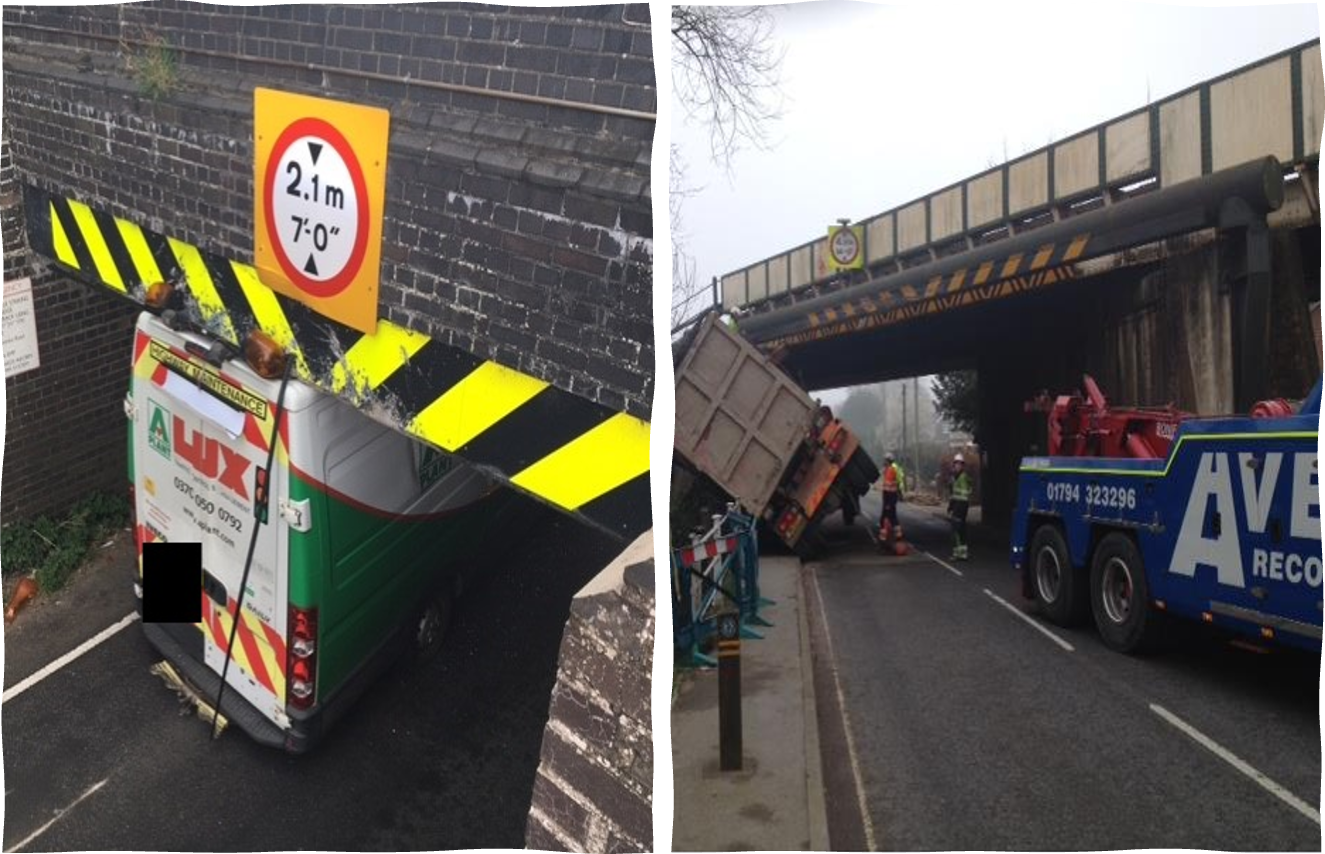
Network Rail recorded 1,706 bridge strikes on Britain's railway between 1 April 2025 and 31 March 2026, about one every five hours, with Watling Street bridge on the A5 in Hinckley, Leicestershire, struck 26 times to top its annual ranking.
The infrastructure owner said the incidents caused 185,319 minutes of delay to passengers and cost about £13.25m in delays, cancellations and repairs. It published the list on 15 November to mark Road Safety Week 2026, which runs until 21 November.
The total is 40 higher than the 1,666 strikes Network Rail reported for 2024/25, although delay minutes dipped slightly from the 186,384 minutes recorded that year. Network Rail put the 2024/25 cost at about £12m in delays and cancellations.
Martin Frobisher, Network Rail's Group Safety and Engineering Director, said: "A bridge strike is never a minor incident. It can put drivers, passengers and railway staff at risk, damage vital infrastructure and cause significant disruption while our engineers make sure the railway is safe."
The ranking
Two Cambridgeshire bridges followed Hinckley: Stuntney Road in Ely with 24 strikes and Stonea Road at Stonea with 23. Station B4105 at Berkswell in the West Midlands was fourth with 18.
| Bridge | Strikes 2025/26 |
|---|---|
| Watling Street A5, Hinckley | 26 |
| Stuntney Road, Ely | 24 |
| Stonea Road, Stonea | 23 |
| Station B4105, Berkswell | 18 |
| Hayfield Road A624, New Smithy | 14 |
| Coddenham Road, Needham Market | 14 |
| Abbey Farm, Thetford | 13 |
| Warminster Road, Westbury | 13 |
| Mantle Road, Brockley | 13 |
| Barrowby Road, Grantham | 12 |
Network Rail said Prescott Street in Wigan, Middleton Road in Surrey and Poole Road in Poole were also each struck 12 times.
Harlaxton Road in Grantham, which Network Rail listed as the second most struck bridge in 2024/25 with 18 strikes, does not appear in the 2025/26 top ten.
Five-year trend
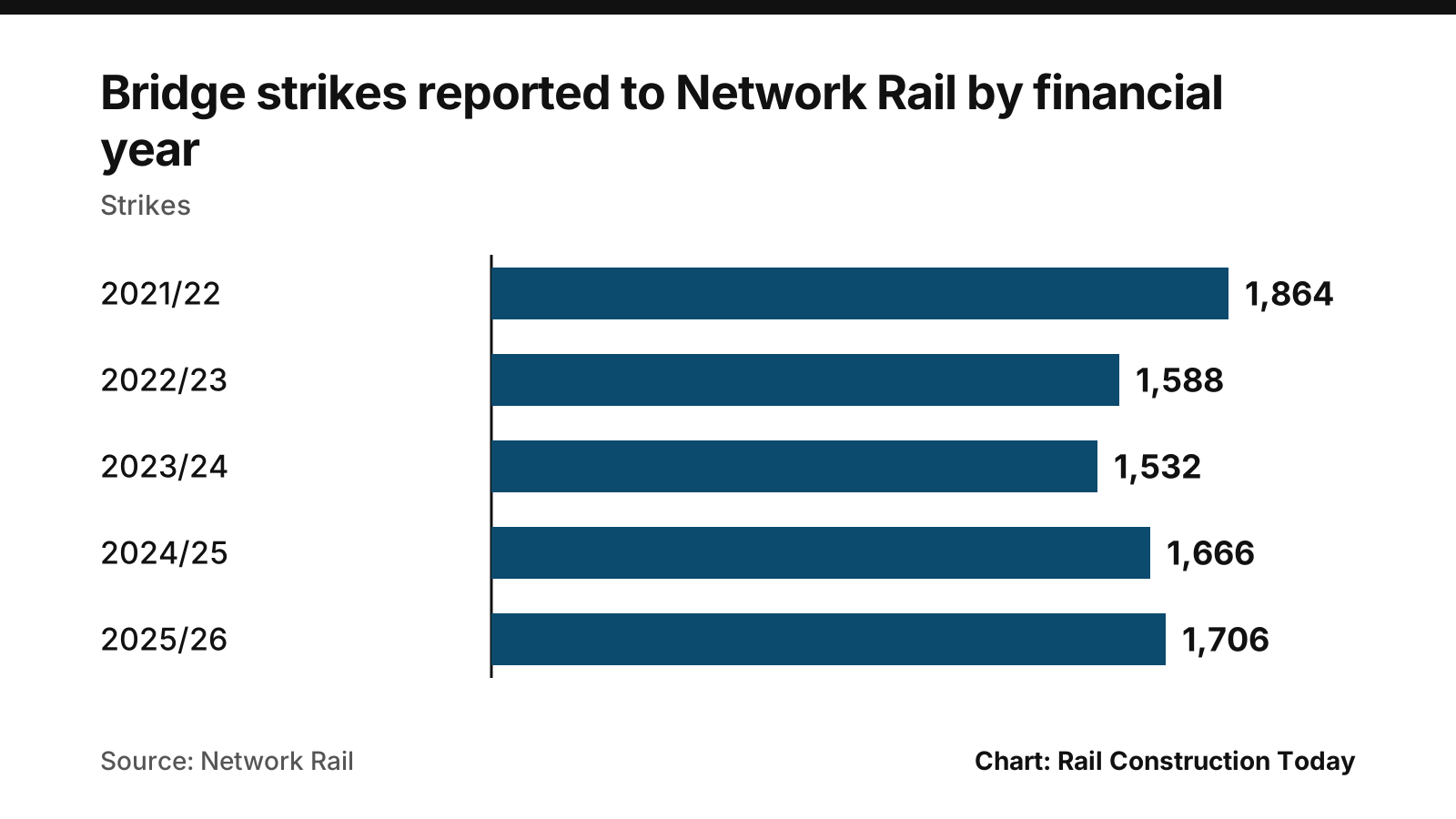
Network Rail's figures show strikes fell from 1,864 in 2021/22 to a low of 1,532 in 2023/24 before rising in each of the past two years. In its December 2025 release the company described the 2024/25 figure as an 8.75% increase on the previous year.
| Year | Strikes |
|---|---|
| 2021/22 | 1,864 |
| 2022/23 | 1,588 |
| 2023/24 | 1,532 |
| 2024/25 | 1,666 |
| 2025/26 | 1,706 |
Network Rail's Wise Up, Size Up campaign page, which it has run since 2018, gives a different cost basis, putting each strike at around £13,000 and the annual cost to the taxpayer at around £23m. The same page says strikes peak in October at almost 10 a day, most of them between 10am and 11am, and that recent legal cases allow the company to claim costs back from hauliers, with a target of recovering 100%.
After every strike, Network Rail said, the bridge must be examined to confirm it is safe and any debris cleared, and the cost includes examination and compensation for train delays as well as repairs. Its research found 32% of drivers admitted setting off without knowing their vehicle height and 56% did not consider low bridges when planning a journey.
Grantham sensor trial
Network Rail said it began a three-month trial with BES Group in December 2025, installing cameras and impact sensors at Harlaxton Road bridge in Grantham to give real-time alerts and capture data and video after a collision. The company had announced in January 2025 that it had secured funding for the £50,000 trial on the East Coast Main Line.
The technology detected strikes and gave engineers information that could support quicker damage assessment on most, but not all, occasions, Network Rail said. It is using the findings to refine the system and assess its potential for wider use.
When the trial was announced, Network Rail route engineer Michael Clegg said the technology would cut post-strike inspection time from hours to seconds in many cases. The company said then that the worst strike at Harlaxton Road, in November 2024, caused £423,022 of damage and 59 hours of delays, and that a successful trial would see the system installed at other suitable bridges in Grantham and further afield.
Physical measures
At Bishton Road in Newport, Network Rail said it worked with Newport City Council to install height-restriction goalposts on both approaches. Network Rail funded the goalposts, which the council built and will maintain alongside improved warning signs and road lining. Strikes at the bridge cost the rail industry more than £396,000 in 12 months in 2023/24, Network Rail said at the time. The bridge does not appear in the 2025/26 top ten.
At Hinckley, Mohammad Raza, Senior Structures Advisor at National Highways, said: "We continue to support developer Mountpark on their scheme to lower the A5 beneath the Hinckley bridge and reduce the risk of further strikes at this location."
Hinckley & Bosworth Borough Council said in July 2023 that a scheme had been approved to lower the A5 beneath the railway bridge on the single carriageway just outside the town. The council said the bridge had been struck 88 times in five years, delaying 246 trains, and cited Midlands Connect research putting delays from the strikes at more than 4,400 hours a year.
Regulatory position
The Senior Traffic Commissioner for Great Britain, Richard Turfitt, has written to operators of large vehicles warning that regulatory action over bridge strikes was a real possibility. The letter said operators should have height measurement gauges on their sites and an established running height on the technical record of each vehicle and trailer.
Network Rail said it continues to work with haulage and logistics operators, local authorities, the Driver and Vehicle Standards Agency, National Highways and other transport bodies, and that its bridge strike champions visit haulage businesses to encourage drivers to check heights and plan routes. Its network includes 30,000 bridges, tunnels and viaducts and 20,000 miles of track.
On the record: Newport City Council
Sources
- Network Rail (opens in a new tab) (accessed 2026-11-15)
- Network Rail (opens in a new tab) (accessed 2026-11-15)
- Network Rail (opens in a new tab) (accessed 2026-11-15)
- Network Rail (opens in a new tab) (accessed 2026-11-15)
- Network Rail (opens in a new tab) (accessed 2026-11-15)
- Network Rail (opens in a new tab) (accessed 2026-11-15)
- GOV.UK (Office of the Traffic Commissioner) (opens in a new tab) (accessed 2026-11-15)
- Hinckley & Bosworth Borough Council (opens in a new tab) (accessed 2026-11-15)
This story was researched from the primary sources above and checked against them before publication. Spotted an error? Tell us and we will correct it promptly.