HS2
HS2 starts moving Euston station spoil by rail, cutting 10,000 lorry trips
Mace Dragados has begun bulk excavation for the HS2 station at Euston, with up to 170,000 tonnes of material leaving by GB Railfreight trains from a new loading facility beside Track 17.
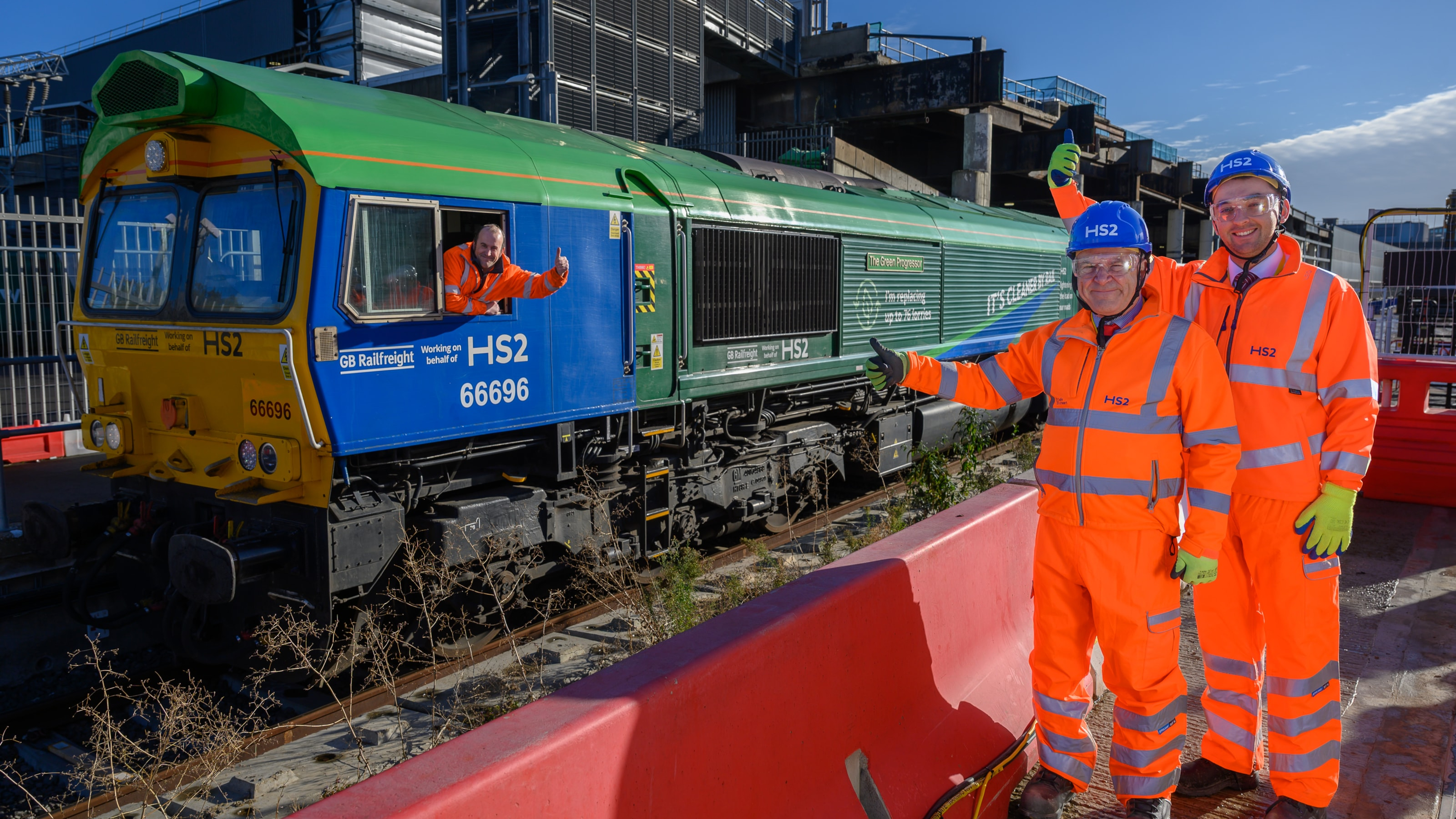
HS2 Ltd has begun removing excavated material from its Euston station site by rail, with up to 170,000 tonnes due to leave on GB Railfreight trains from a new loading facility beside the station's disused Track 17.
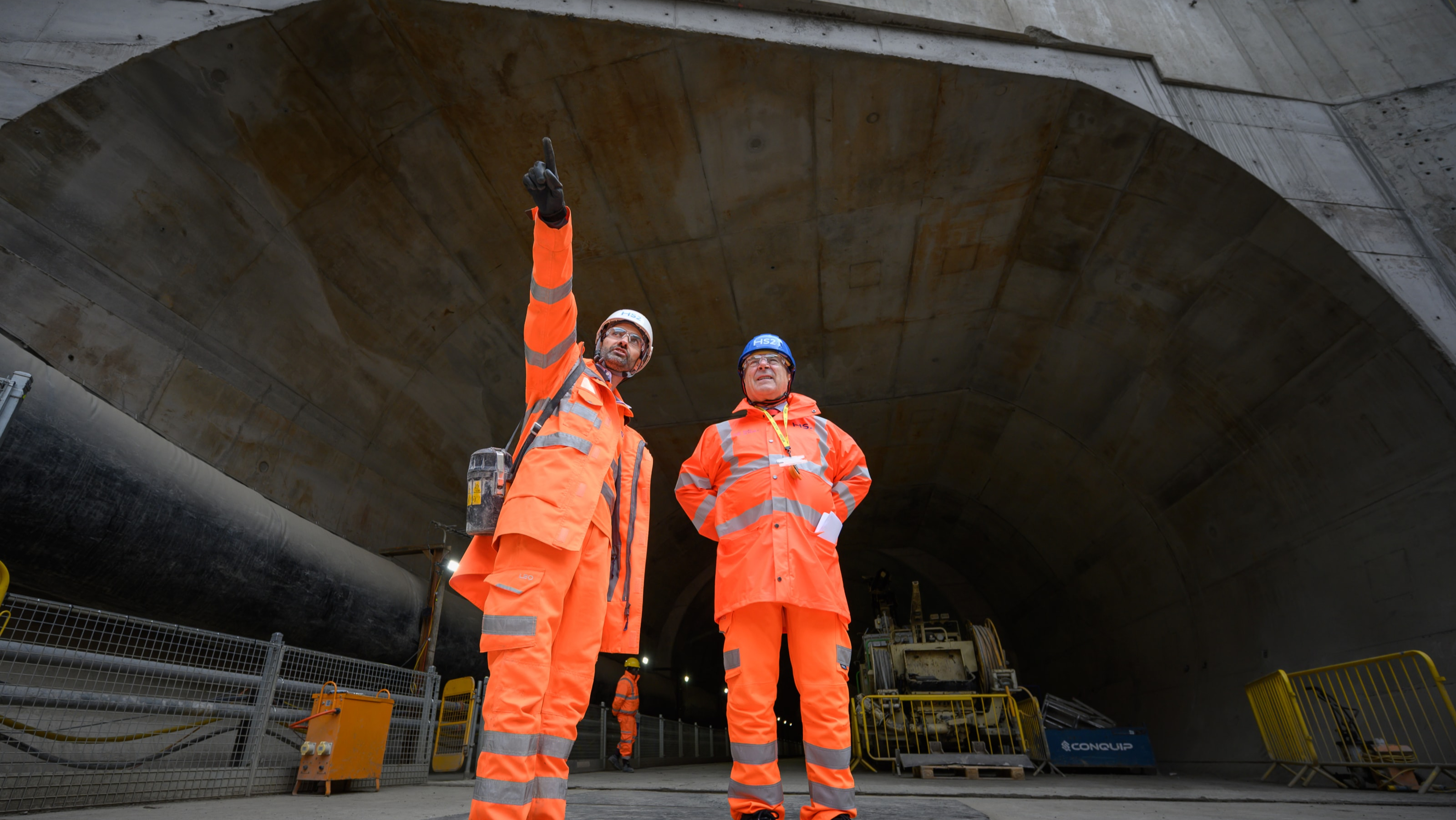
The company said the programme would remove the need for more than 10,000 heavy goods vehicle (HGV) movements on roads around Euston and across London. Rail Minister Lord Hendy visited the site on Monday 16 November to see the operation.
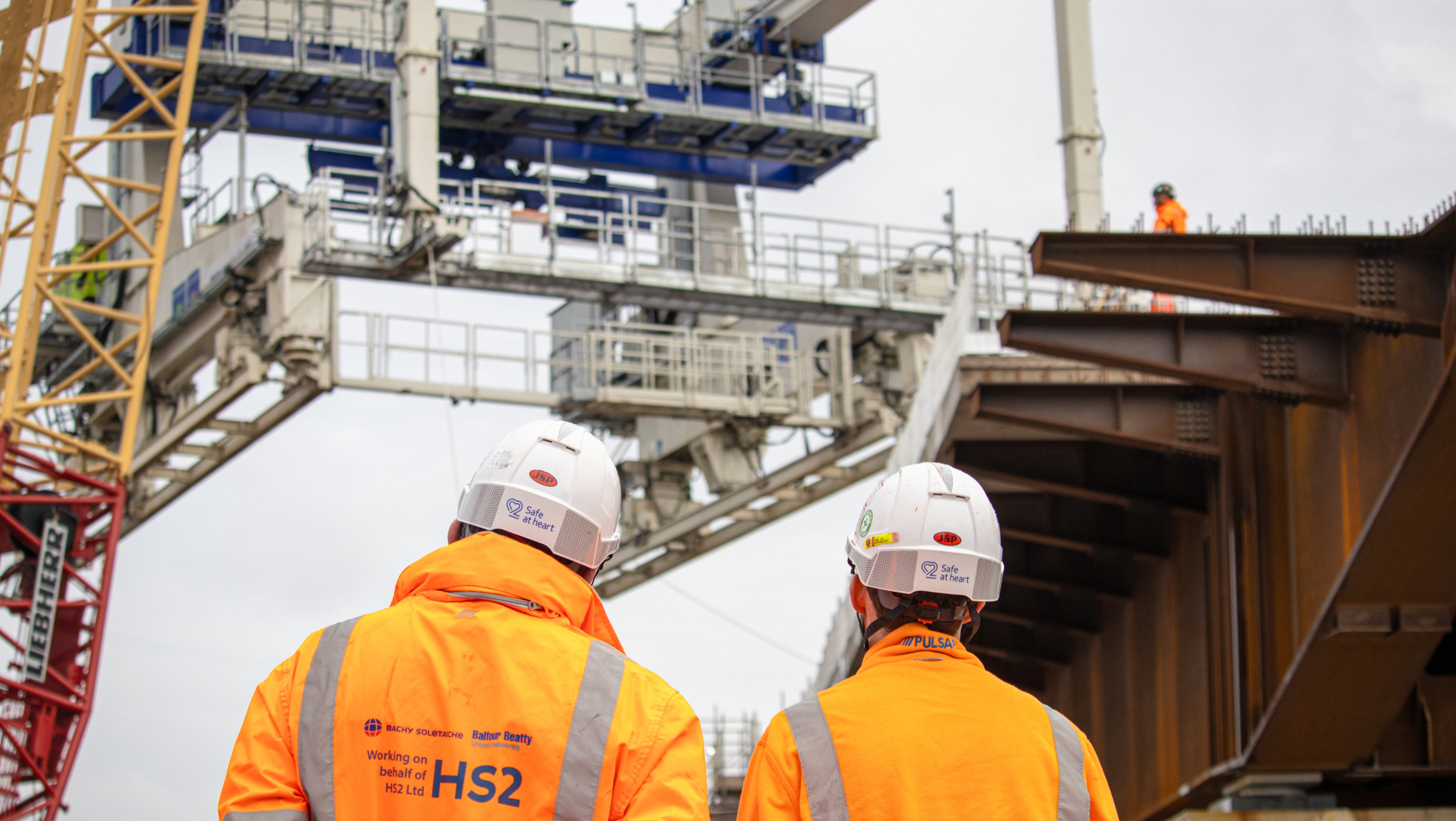
HS2's station construction partner, the Mace Dragados joint venture (MDJV), has started bulk excavation of the station site, digging to a depth of about seven metres where the HS2 platforms will be built, HS2 Ltd said.
Lord Hendy, Rail Minister, said: "Moving this soil by rail will mean thousands fewer HGV journeys through the streets around Euston, helping to reduce disruption for local people, improve road safety and cut carbon emissions."
The trains
The material is taken to Forders Sidings in Bedfordshire for reuse at the Stewartby Brickworks development, according to HS2 Ltd.
Up to two GB Railfreight trains a day will run during the main excavation, each formed of two locomotives and up to 12 wagons and carrying about 715 tonnes, which HS2 Ltd put at the equivalent of around 45 HGVs. The company said the configuration maximises the load while leaving enough time for loading and unloading.
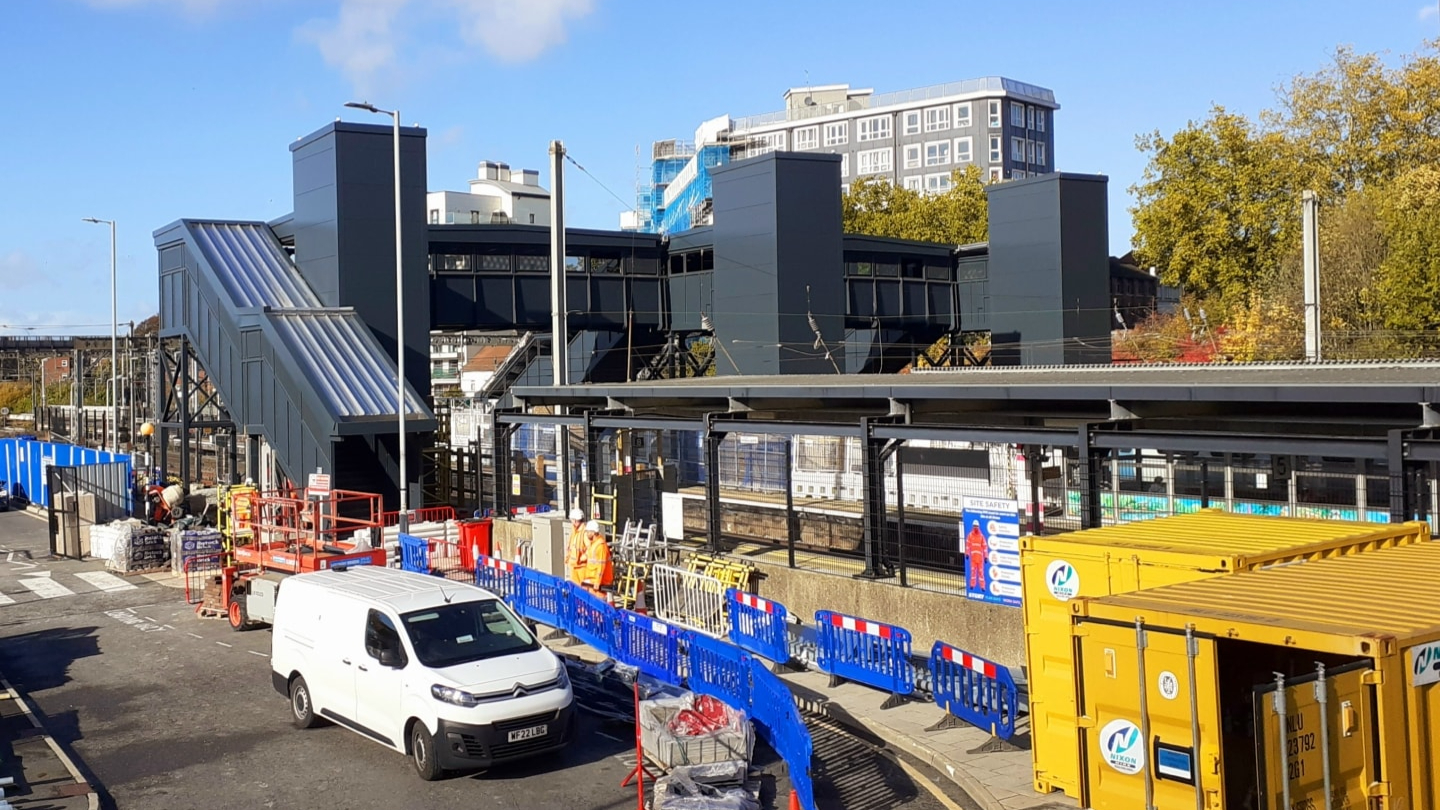
The operation has been planned with Network Rail so that freight trains can run alongside passenger services at Euston. Patrick Cawley, Director for On Network Works at Network Rail and HS2, said accommodating the trains alongside the day-to-day operation of one of Britain's busiest stations had been a collaborative effort across many teams.
Trials and next phase
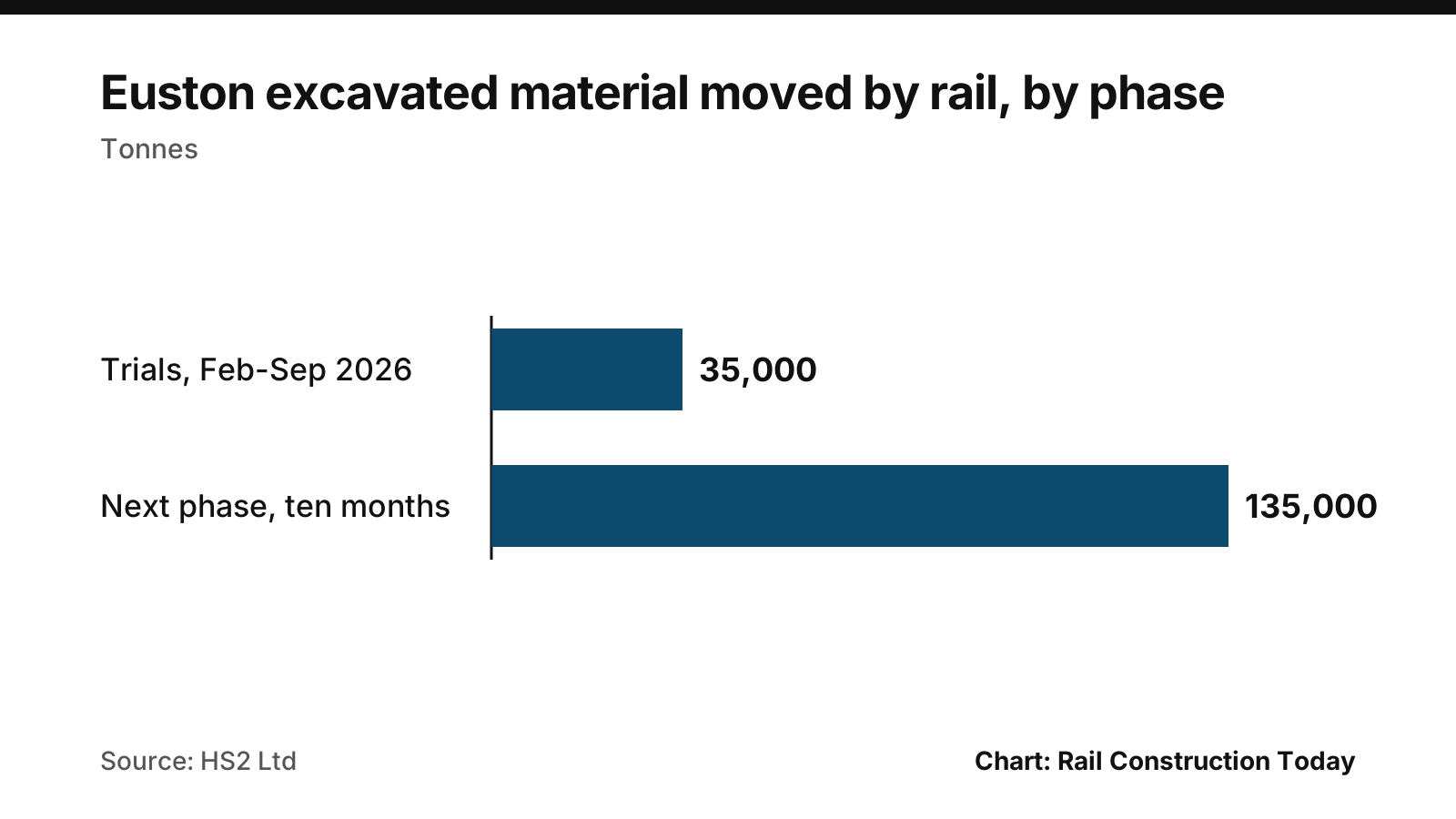
About 35,000 tonnes was moved during trials between February and September 2026. HS2 Ltd said the trials showed each train could carry more material than originally anticipated and could run reliably alongside passenger services.
A further 135,000 tonnes is expected to be removed in the next phase over the coming ten months.
| Phase | Material moved by rail (tonnes) |
|---|---|
| Trials, February to September 2026 | 35,000 |
| Next phase, over ten months | 135,000 |
Andy Swift, Stations Delivery Director at HS2, said the programme had required careful planning with Network Rail, GB Railfreight and construction partners, and that the collaboration would allow up to 170,000 tonnes to move by rail while passenger services continued at Euston.
Camden's position
Cllr James Slater, Leader of Camden Council, said: "For many years, Camden has called for construction materials to be removed from Euston by rail, so it is excellent to see this now being delivered at scale."
He said the council wanted every opportunity taken to increase the amount of material moved by rail as construction progressed.
The commitment has a long history. HS2 Ltd's 2016 report on material by rail at Euston, published on GOV.UK, followed assurances given to Camden and Transport for London during the Commons Select Committee stage of the hybrid Bill, including a commitment from the Secretary of State for Transport. The final report went to the Secretary of State in July 2016.
Wider rail freight use
HS2 Ltd said rail freight produces up to 76 per cent fewer CO2 emissions than road freight when carrying the same weight over the same distance.
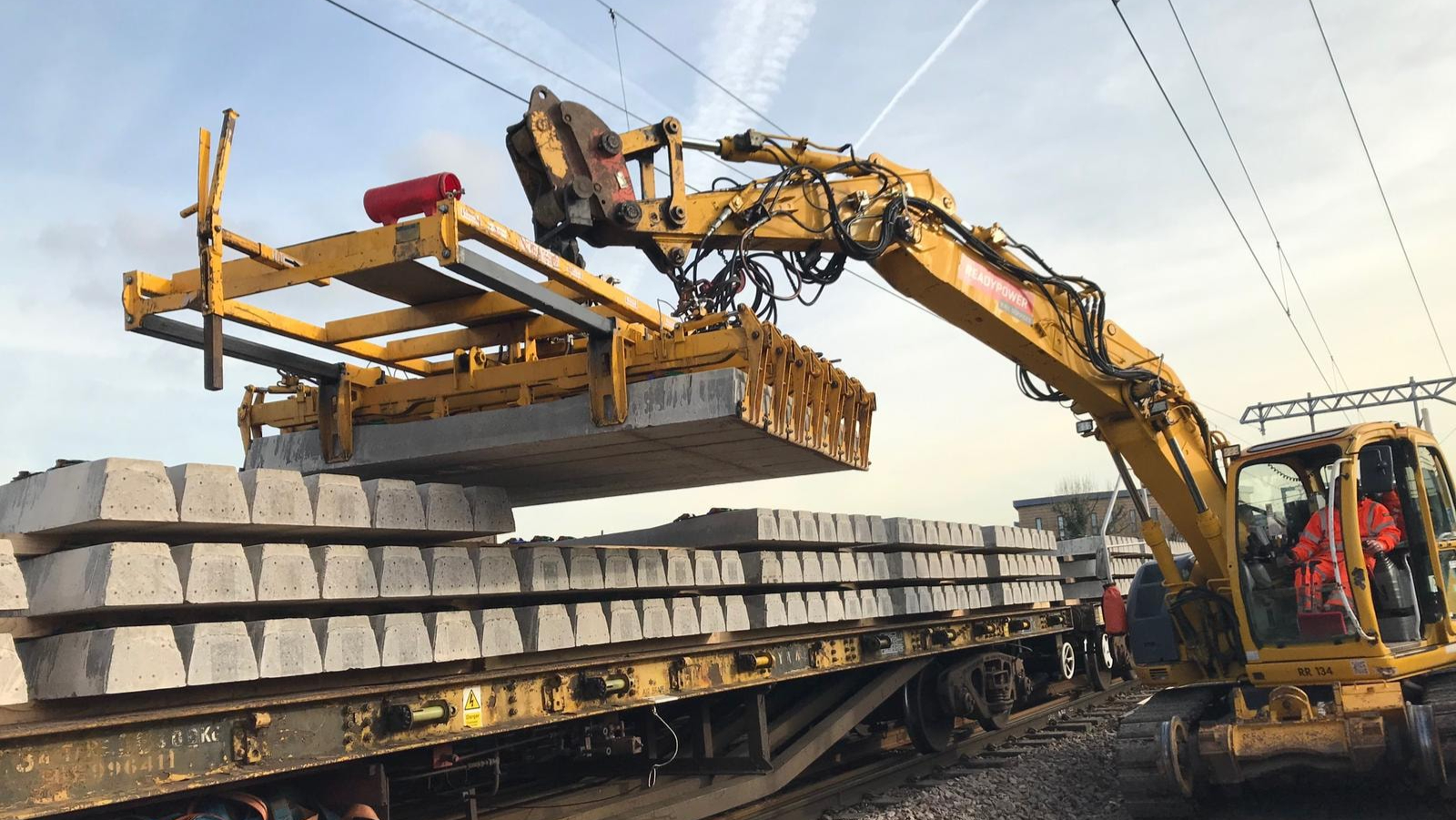
The company said freight trains had already brought aggregate to sites in Buckinghamshire and Birmingham, delivered tunnel segments to West Ruislip and Willesden, and carried millions of tonnes of excavated material away from sites around Old Oak Common.
The Euston station excavation is separate from the tunnelling programme. In January 2026 the Department for Transport and HS2 Ltd announced that tunnelling towards Euston had started from Old Oak Common. In the same announcement, the Skanska Costain STRABAG joint venture said its tunnel segments and excavated material for the Euston tunnels would all move by rail, removing over 70,000 lorry journeys from the local road network.
In his statement, Lord Hendy said all 23 miles of tunnels between Old Oak Common and Birmingham had been dug, more than 80% of the project's major structures were under construction or complete, and 20 million cubic metres of earth had been moved, 16% ahead of plan.
What happens next
Track 17 is expected to remain available until early 2029. HS2 Ltd said it would continue working with the Euston Delivery Company, the body the government said in January 2026 would take forward its plans for Euston, and other partners to explore using the facility to support construction across the wider Euston campus.

On the record: Department for Transport, Transport for London
Sources
- HS2 Ltd (opens in a new tab) (accessed 2026-11-17)
- Department for Transport and High Speed Two (HS2) Limited (opens in a new tab) (accessed 2026-11-17)
- High Speed Two (HS2) Limited on GOV.UK (opens in a new tab) (accessed 2026-11-17)
This story was researched from the primary sources above and checked against them before publication. Spotted an error? Tell us and we will correct it promptly.